



Welcome
The International Dyslexia Association Georgia Branch is here to serve the needs of families, educators, and professionals concerned with struggling readers. IDA Georgia is a non-profit organization dedicated to helping individuals living with dyslexia, a learning difference affecting up to 20% of the U.S. population and their families and the communities that support them. Our goal is to provide essential research-based information about assessment, diagnosis, resources, and appropriate educational intervention. To increase public awareness and remediation of dyslexia, we offer an information and referral hotline, a branch website, monthly e-news updates, free community outreach events, the Dyslexia Dash 5K, professional education conferences and webinars, and information about teacher training workshops and courses.
Whether you are an individual with dyslexia, a parent, a professional, or someone interested in learning more and being a part of the growing demand for change, we hope you will find inspiration and guidance here. We welcome you to contact us for additional information – until everyone can read!
Stacey Levy
President
International Dyslexia Association Georgia
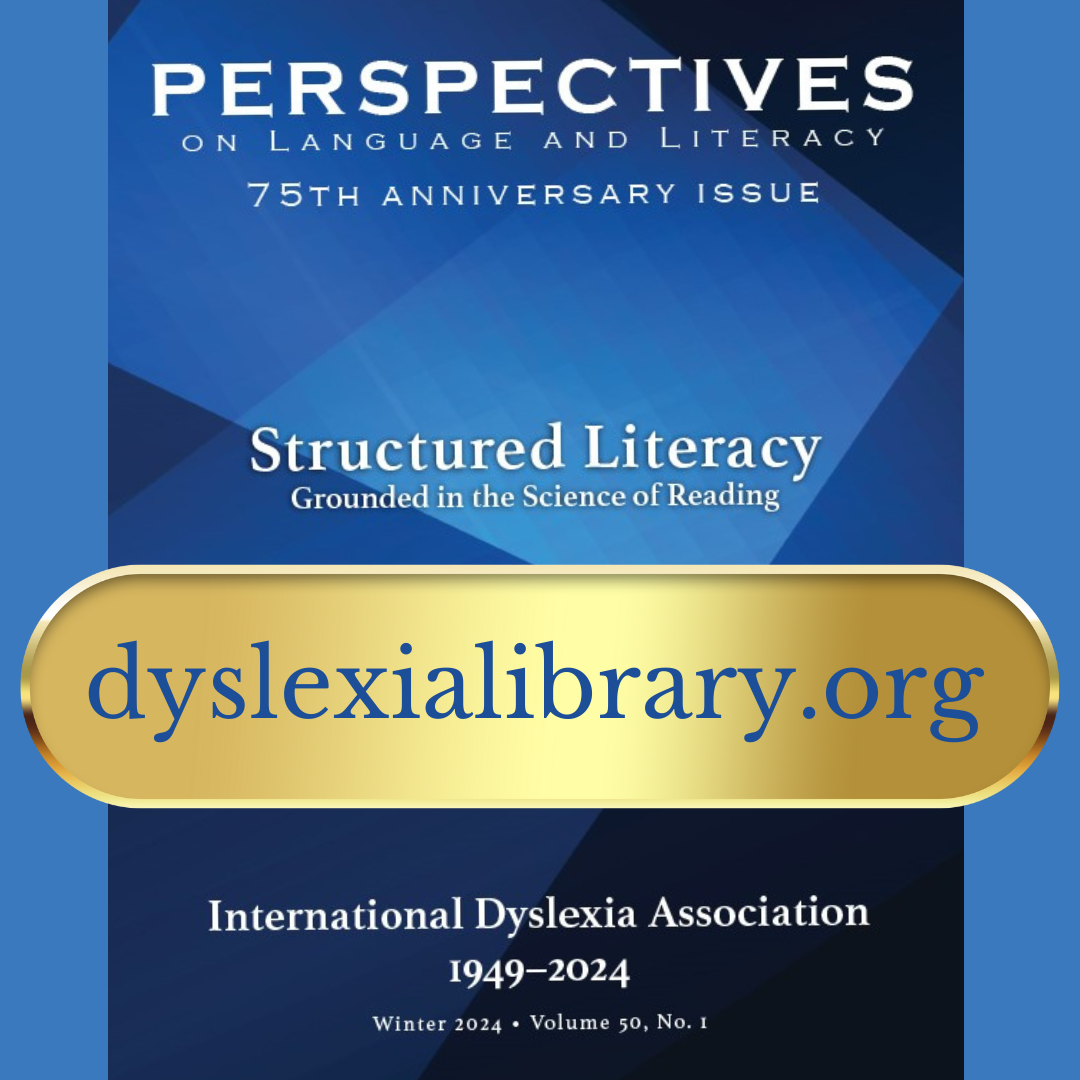 Special 75th Anniversary Edition – Perspectives on Language and Literacy
IDA is thrilled to share the release of the Perspectives Special 75th Anniversary Edition focusing on the importance of Structured Literacy! This edition is a significant milestone in our ongoing efforts to advocate for effective literacy instruction, particularly for individuals with dyslexia. Visit dyslexialibrary.org to view this edition and MORE!
It’s Springtime! Have Some Eggs-tra Fun with Words!
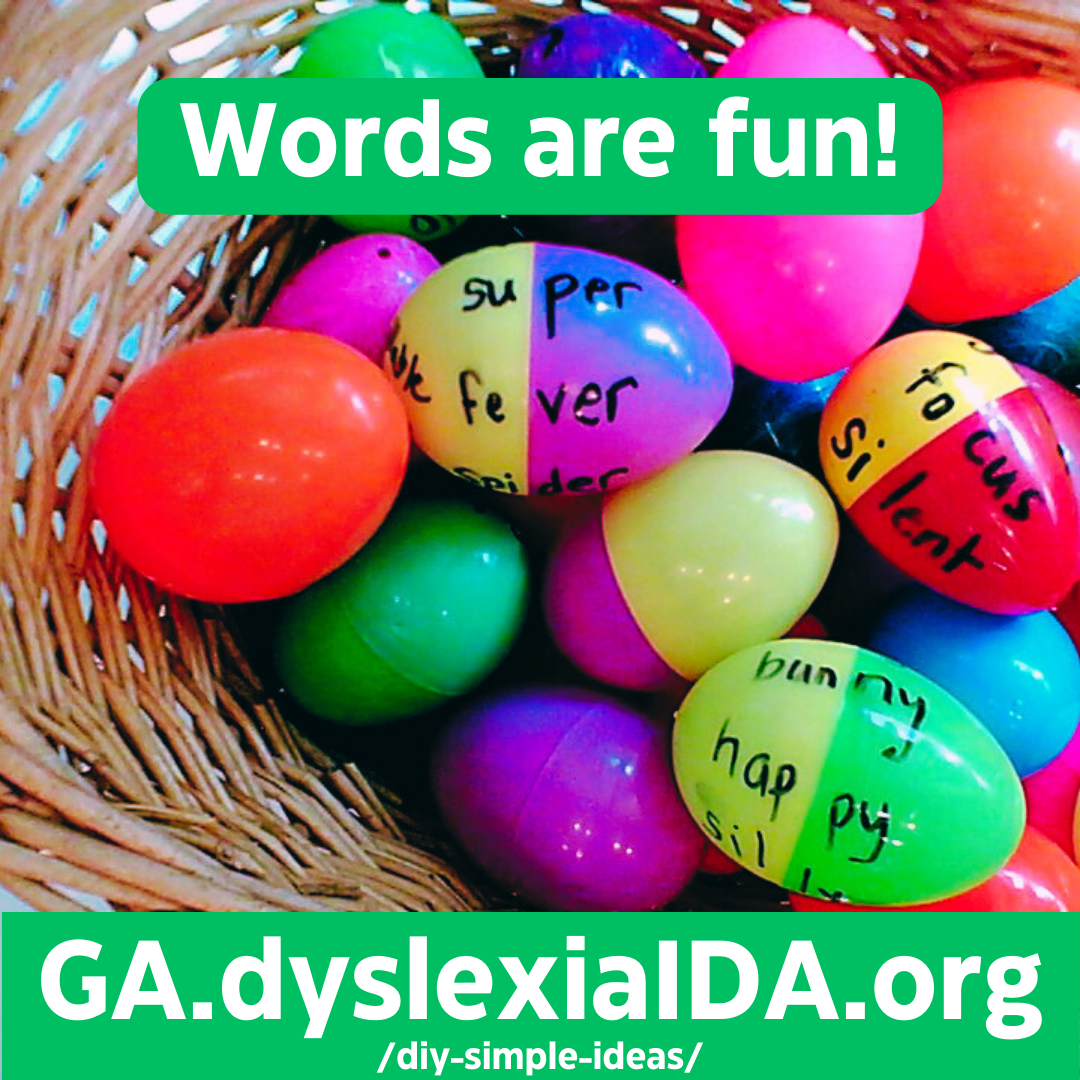 Egg Puzzles Make Eggs-tra Springtime Fun! Is your child ready for the thrill of cracking the code in two-syllable words? Let’s get creative with the plastic eggs.
-Decide which words to include based on what your child or students have been previously taught about the code.
-Mix and match halves.
-Write a syllable on each half of the eggs. Twist the halves to mix up the words. — -Challenge your child to match the halves so that all are real words.
-After the puzzle is solved, talk with your child about the word meanings and how they could be used. Discover together how some words have multiple meanings (homographs).
Visit https://ga.dyslexiaida.org/diy-simple-ideas/ for more details
Breaking News – Georgia Senate Bill 464 – Universal Screener Requirements
IDA-GA Conference & Dyslexia Dash Sponsorship Opportunities
Register to become a sponsor. Click HERE to view the Sponsorship Packet.
Early Bird Conference Registration is OPEN through June 15. Take advantage of Early Bird and Membership discounts. Standard registration opens June 16.
CONGRATULATIONS TO THE WINNERS OF THE SCHOOL CONFERENCE SCHOLARSHIPS!
2024 IDA Georgia Scholarships & Grants
Let us help! APPLY NOW!
 One of the main goals of the International Dyslexia Association Georgia (IDA Georgia) is to promote evidence-based literacy instruction for teachers. We believe that training teachers will have the greatest impact on students who struggle to learn how to read in Georgia. To facilitate this goal, a Teacher Scholarship Program has been established to provide support to teachers to help offset the personal costs of such training. We fund individual teachers and not schools or school districts with our program. Our scholarship is designed for teachers in public or private schools to provide structured literacy instruction to students at no cost in their own school setting. The scholarship program at this time is not intended to train tutors. Read more: https://ga.dyslexiaida.org/scholarship-guidelines/
Check the schedule for deadlines.
The Dyslexia Dash raises funds for IDA-GA Grants and Scholarships
 Save the Date for October 19, 2024, our in-person Dyslexia Dash day! You and your family and friends who cannot join us in person on Dash Day can register as a virtual runner or gather together as a group of virtual runners on any day leading up to October 19. More information: https://runsignup.com/Race/GA/Atlanta/DyslexiaDash
Structured Literacy: An Introductory Guide
The IDA-GA Scholarship Program aims to offer scholarships for individuals taking courses in structured literacy professional education methodologies that provide an understanding of evidence-based best practices for educating students with dyslexia.
We at IDA-GA appreciate the commitment to learning about the science of reading and how to implement the components of Structured Literacy in the classroom.
Ryan Sias – Author, Illustrator, Animation Artist, Teacher, and Adult with Dyslexia
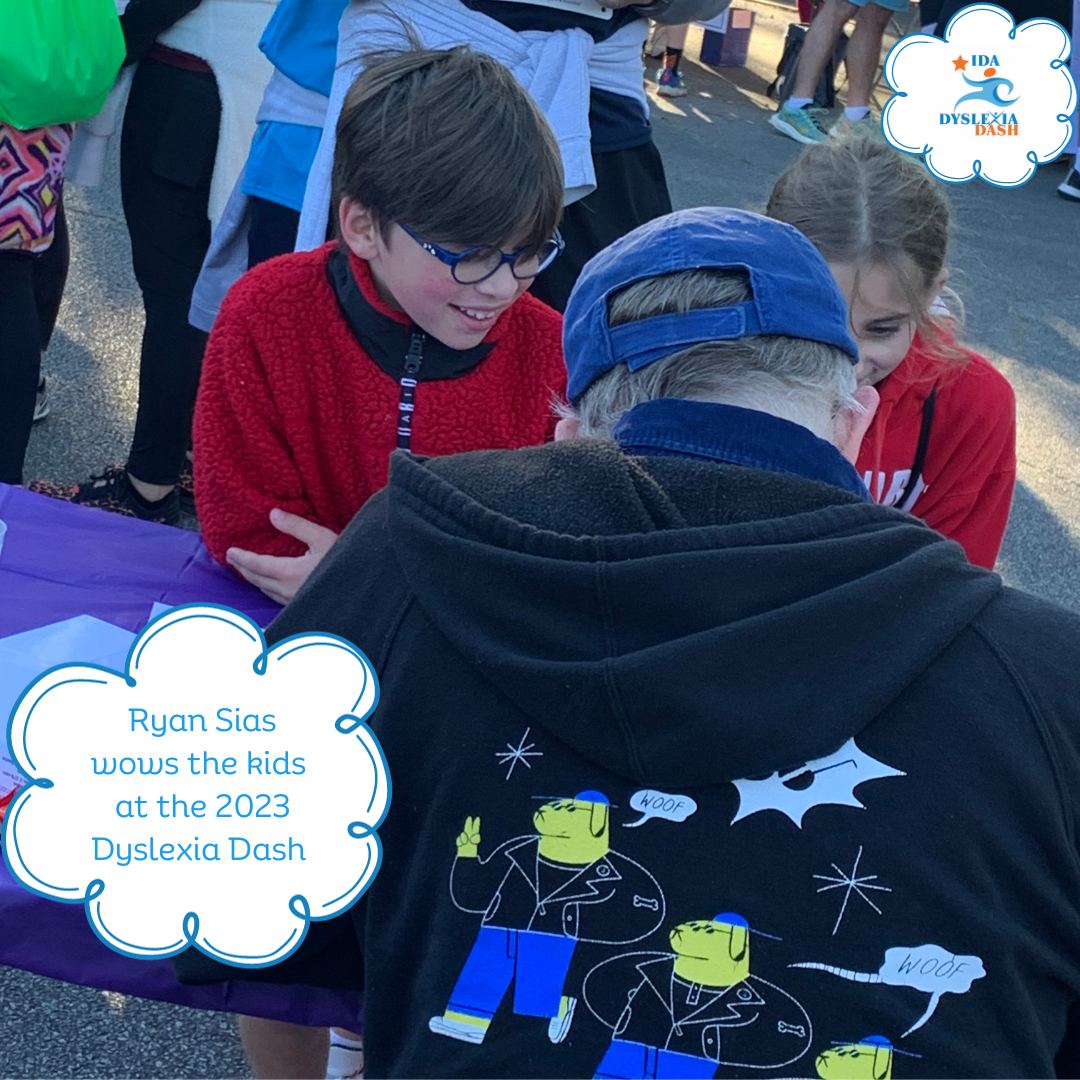 At our September 26 event, board members and attendees chatted with Ryan Sias about his fascinating career and his dyslexia. Learn more about Ryan Sias and this kickoff event: https://ga.dyslexiaida.org/event/kickoff-event-9-26-2023/
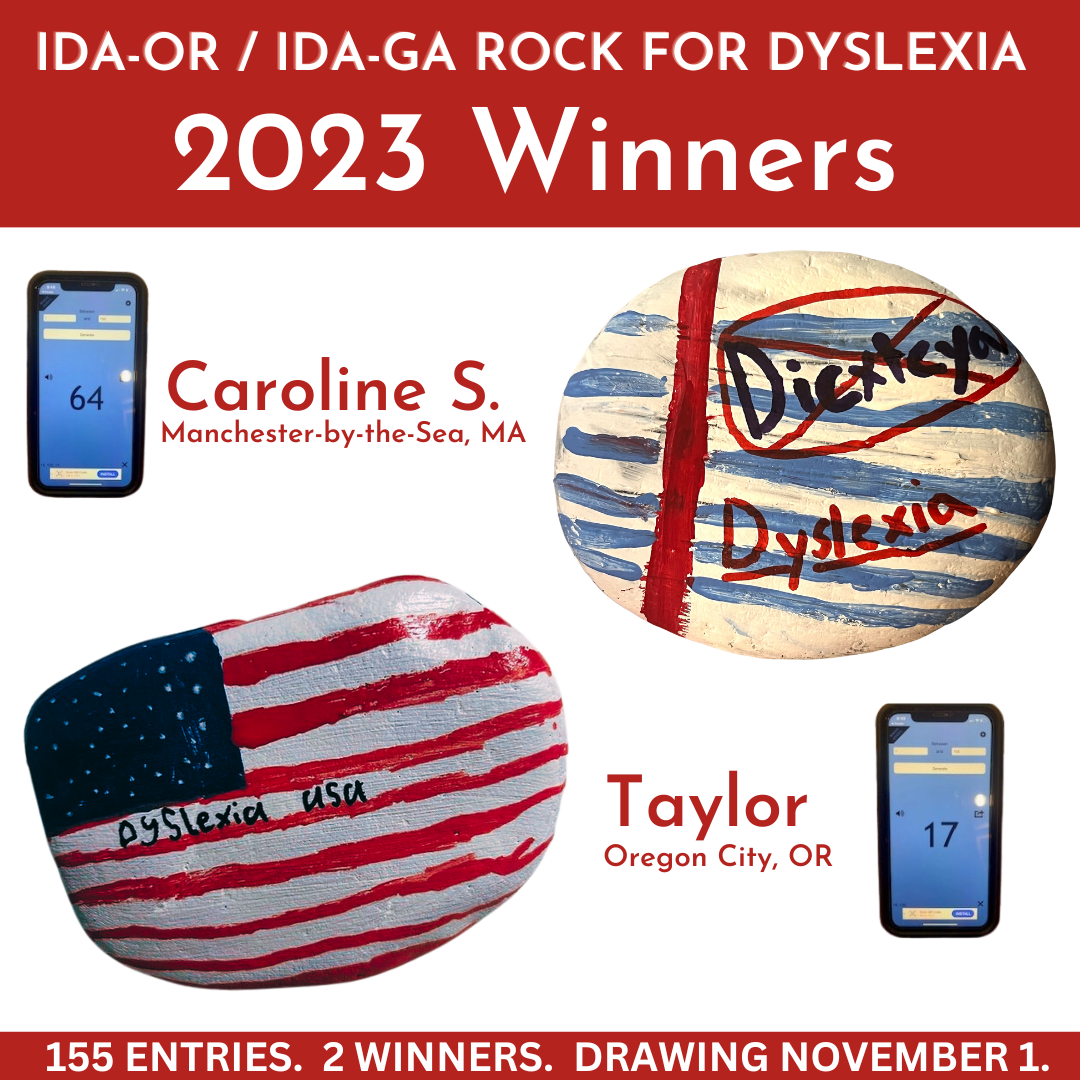 CONGRATULATIONS to our Rock For Dyslexia Contest winners, Caroline S. and Taylor!
#dyslexiayouarenotalone
More information: https://ga.dyslexiaida.org/event/rock-for-dyslexia-contest-2023/
IDA-GA Teen Board Member Completes Service Project for IDA-GA, Receives Gold Award, and is Interviewed by Atlanta Parent Magazine
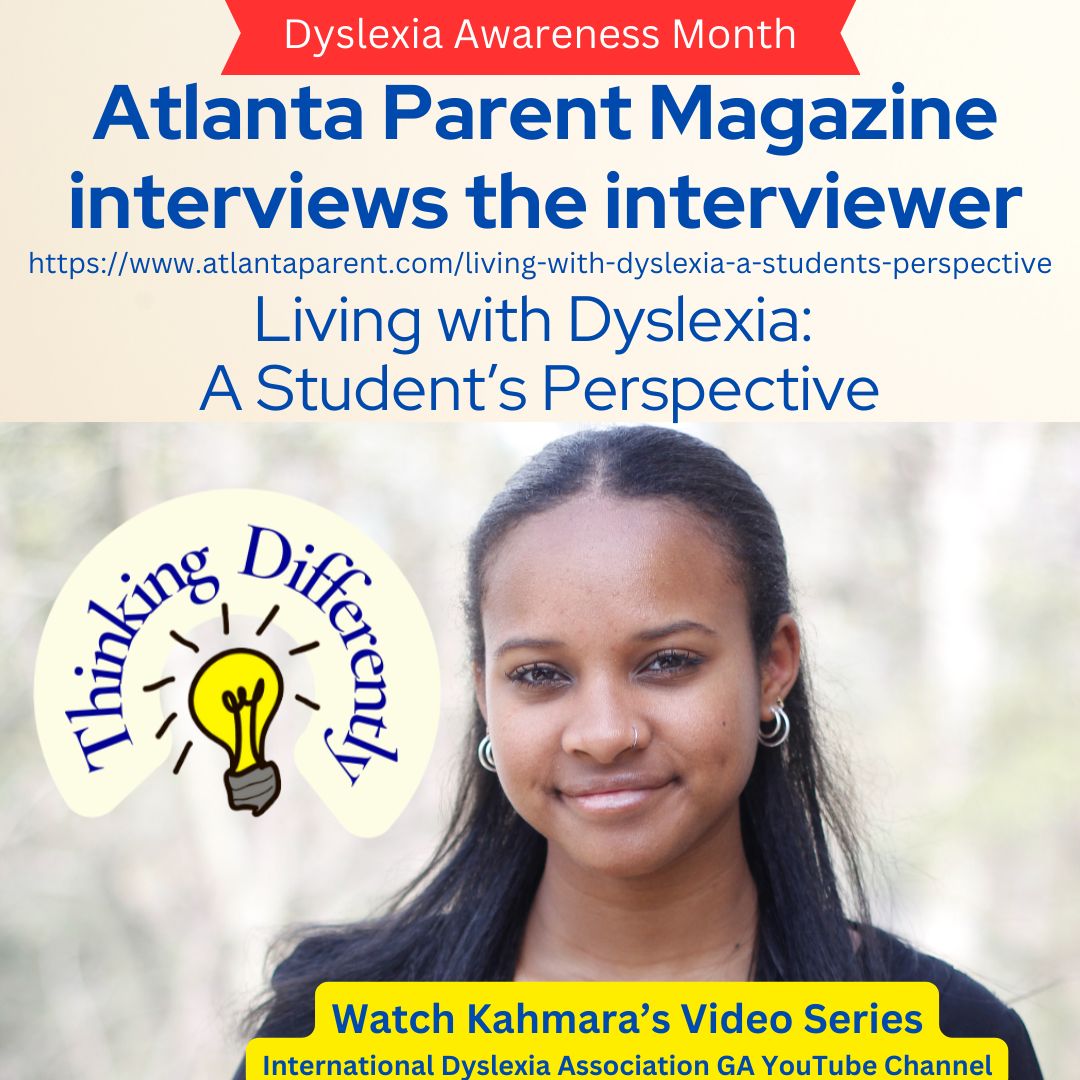
Read the 2023 Interview of the Interviewer: https://www.atlantaparent.com/living-with-dyslexia-a-students-perspective/
CONGRATULATIONS to 2022 IDA-GA Teen Board Member Kahmara Landrum who was awarded the prestigious Gold Award from the Girls Scouts of America for her “Thinking Differently: An Inside Look on Dyslexia” project. The video series features interviews with students and adults with dyslexia, parents, teachers, and specialists. Each interview (below) sheds light on life with dyslexia and provides tips for others who may be struggling or starting their own journey.
Thank you, Kahmara, for your dedication to working with IDA-GA throughout your senior year of high school and from that hard work, producing a truly valuable resource for IDA-GA to offer to the public.
Watch the interviews: https://ga.dyslexiaida.org/thinking-differently-with-kahmara/
Parent-to-Parent: 10 Things I Wish Someone Had Told Me
The Atlanta Parent Magazine also interviewed seasoned parents for their tips for new parents.
The Teen Board Members are available to answer questions
The mission of the IDA-GA Teen Board is to connect with Georgia students who have dyslexia and provide support and assistance to them during their school years. Do you have questions for our Teen Board Members? Fill out this CONTACT US form.
2024 Spotlight on Structured Literacy Webinar Series
We have concluded this year’s series. Three of the four webinars are available for you to watch on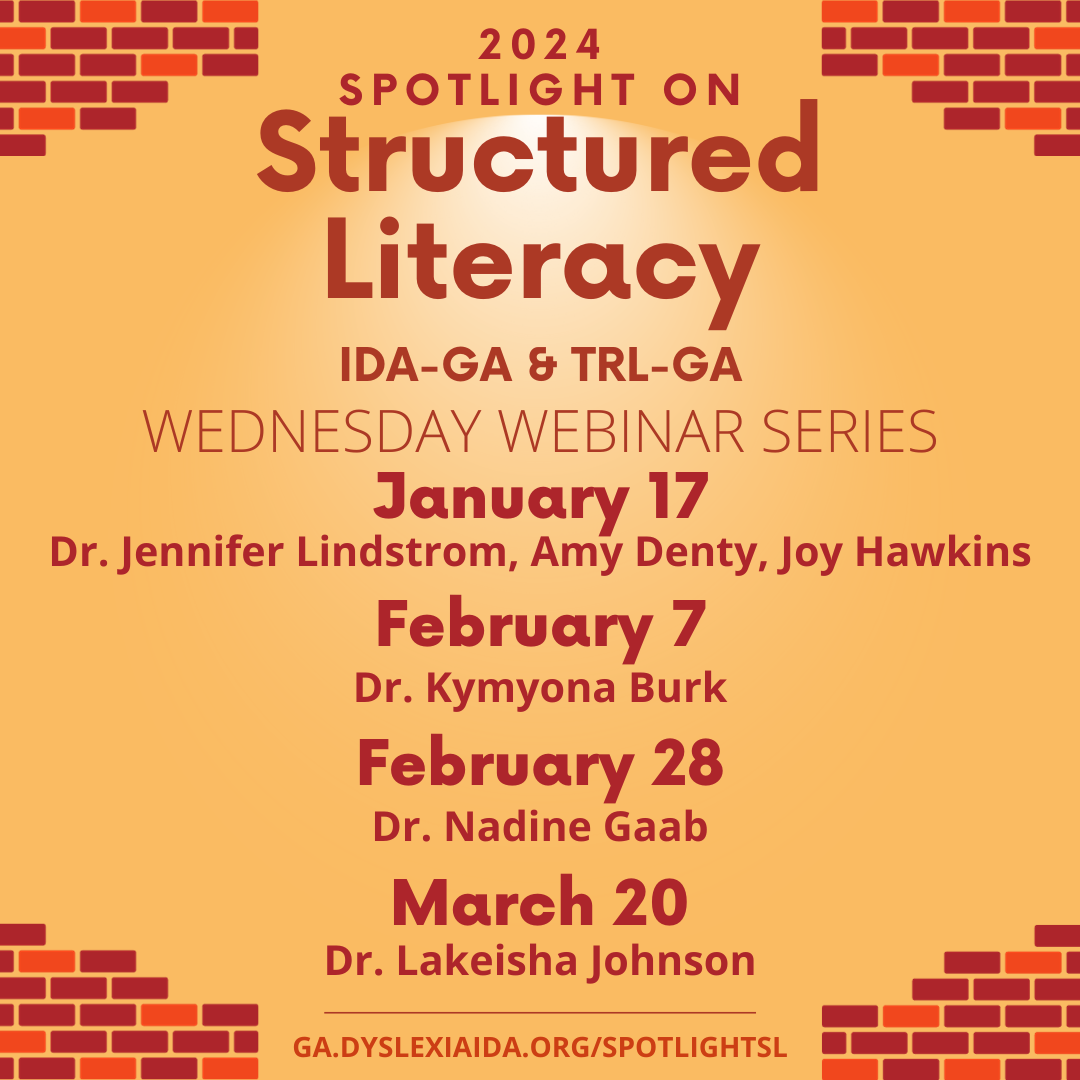 our YouTube Channel. Links to the recordings and resources can be found on the event pages. Access those links here: https://ga.dyslexiaida.org/spotlightsl/
2023 Spotlight on Structured Literacy Webinar Series
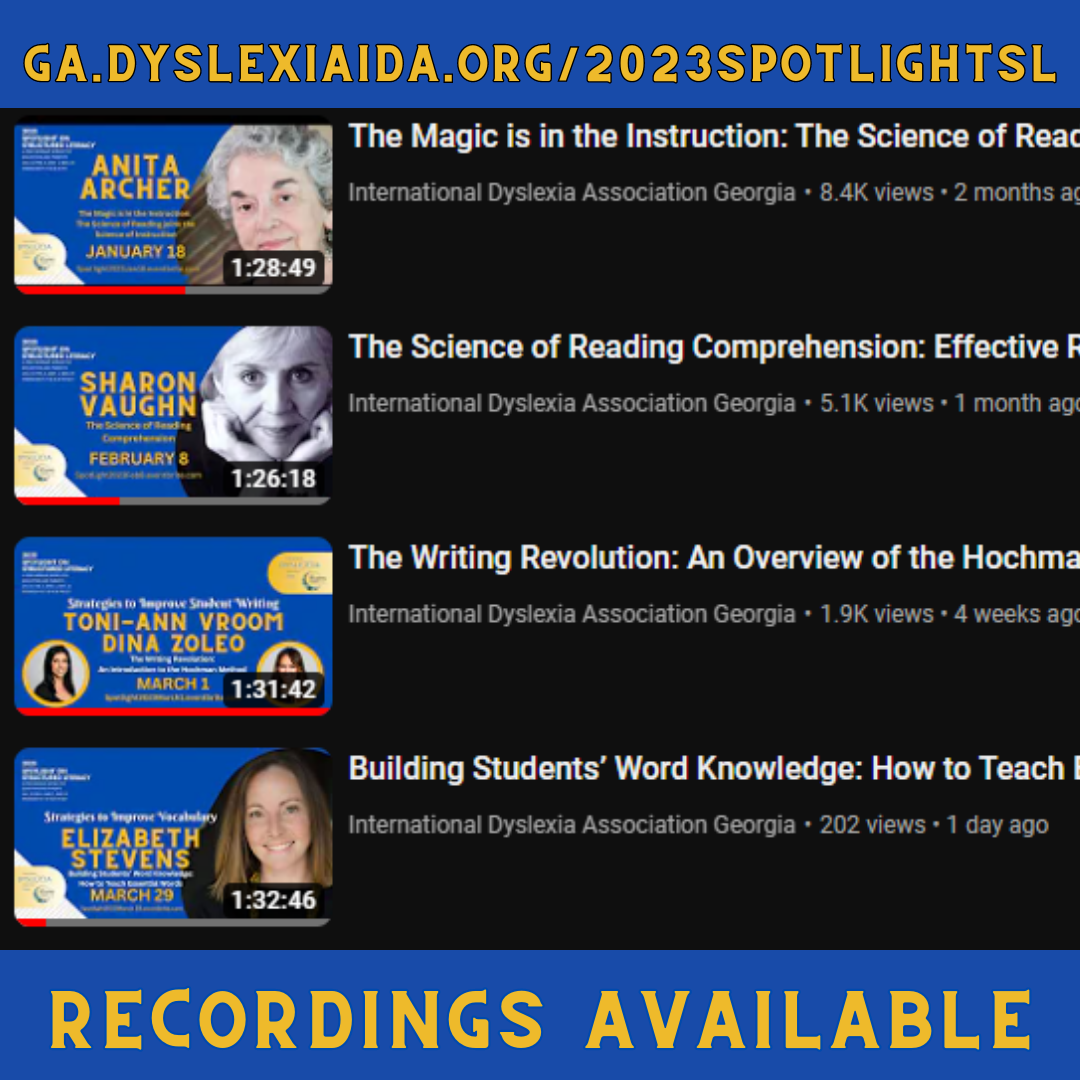 And that’s a wrap for the IDA-GA/TRL-GA 2023 Spotlight on Structured Literacy Webinar Series. The good news is that all of our presenters so graciously allowed us to record the webinars so that as many people as possible have the opportunity to watch and learn. Keeping in mind structured literacy refers to both the content and methods or principles of instruction, in this 4-part series, our speakers discuss both how to most effectively instruct reading based on the science of instruction AND what content to instruct to ensure students become competent readers and writers.
Youth Workforce Program
 The International Dyslexia Association (IDA) is pleased to announce our new Youth Workforce Program. The initiative, developed by IDA in partnership with the Synchrony Foundation, helps to prepare high school juniors, seniors, and college students with dyslexia and other learning disabilities to successfully enter the workforce or higher education. This program, which is free to participants, will provide both workshops and hands-on, transition skills training, and is geared towards youth between the ages of 14 –20.
Youth Workforce Program Information and Application
What is MOST Important in Early Instruction?
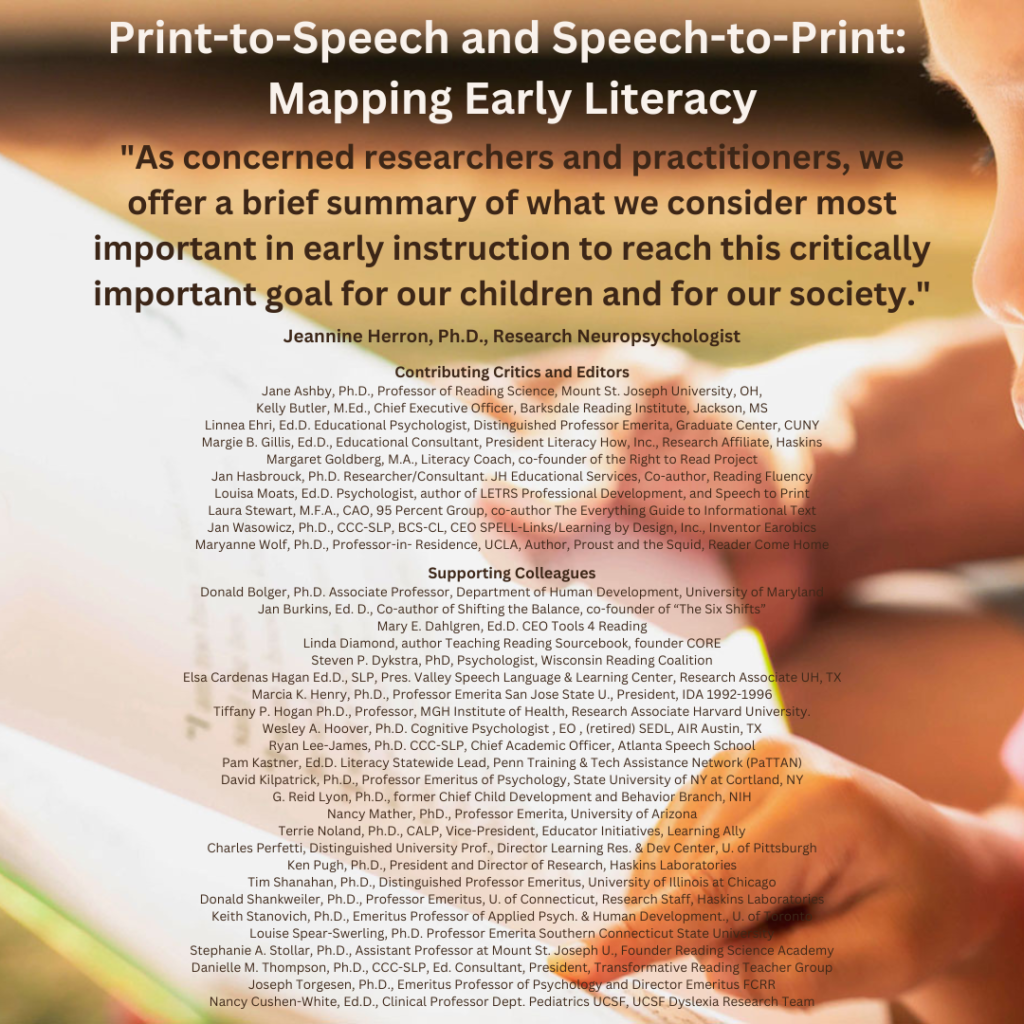
In this overview, learn how early literacy benefits from both print-to-speech and speech-to-print instruction, creating connections in the brain that link new knowledge about the alphabet to what children already know and are continuously learning about words.
The authors of this article are a group of researchers and practitioners who are looking to end the divisiveness of the “reading wars” — and help children learn to read and write with competence and pleasure. See the list of contributing editors as well as the 25 nationally recognized colleagues who support this effort.
Read the consensus article by the “Reading Peaceniks” published on Readingrockets.org on Dec. 15, 2022.
IDA has a new Fact Sheet published Summer 2022. Read “Building Phoneme Awareness: Know What Matters” here. Have some fun with phonemes and word play here: https://ga.dyslexiaida.org/word-play/
Do the best you can until you know better. When you know better, do better. Watch Anita Archer’s summarizing thoughts from the 2022 PaTTAN Symposium.
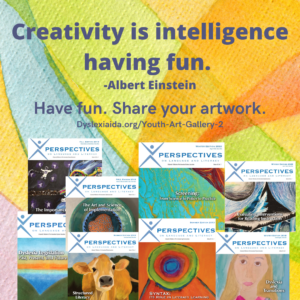
Submit your artwork!
The International Dyslexia Association (IDA) highlights the artistic talents of students AND ADULTS with dyslexia and other related learning disabilities throughout the year at IDA’s home office and in various IDA publications. Encourage the artist you know to submit their artwork to IDA to be considered for the cover of IDA’s Perspectives magazine or other IDA publications.
Simply fill out this short contact form, sign the waiver, and attach it and a clear photo of the artwork to an email sent to Denise Douce at ddouce@dyslexiaida.org.
If you are a resident of Georgia, please also send your artwork to info@idaga.org. The artwork featured on the 2019 Summer issue of Perspectives was submitted by Riley Schutt of Milton, GA.
To view her artwork as well as other artwork published on the cover of previous issues of Perspectives, click HERE.
2022 IDA-GA/TRL-GA Spotlight on Structured Literacy Webinar Series
January 19 – Recording Now Available
February 9 – Recording and Slides Now Available
March 2 – Recording and Slides Now Available
April 27 – Recording and Slides Now Available
Updates and Next Steps – GaDOE State Dyslexia Committee Meeting
On Thursday, November 18, 2021, the GaDOE Dyslexia Team provided updates and next steps surrounding the Committee’s work. More information, including the link to the recording, can be found here.
IDA Community Outreach
Please click on the events listed on our calendar for more information about our free outreach events. We hope to keep you informed of the many resources available from IDA and other trusted sources. In 2020, IDA compiled the Dyslexia and Reading Disabilities Resource Guide For Families and Teachers. Learn more and download the guide for FREE at bit.ly/IDAGuide
Georgia State University – Investigating How the Brain Works When We Read
Assistance for Georgia Families and Schools 2020-2021
The video recordings for the 2021 IDA-GA Dyslexia Knowledge Series are now available! Click HERE.
It is with the continued support of our sponsors that we are able to offer not only scholarship and grant opportunities but also events like this that are free and open to all those interested in learning more about dyslexia and effective interventions.
February 23 was Dyslexia Day 2021
Visit the Decoding Dyslexia GA Facebook page at https://www.facebook.com/decodingdyslexiaga/ to learn about the day’s events.
Check out these videos created for Dyslexia Day 2021:
- Dyslexia Is My Superpower, a poem written for Dyslexia Day 2021, is performed by students from across the state of Georgia: https://fb.watch/3QYPQZUqLH/
- In the short video below, students and teachers from the Howard School answer the question, “Why is Early Identification and Intervention critical for Dyslexic students?”
GA DOE’s Dyslexia Informational Handbook
Gov. Kemp Signed Dyslexia Bill SB48 into Law on May 2, 2019. Watch this historic moment. CLICK HERE for more information. The Georgia Department of Education released the Dyslexia Informational Handbook: Guidance for Local School Systems on November 22, 2019.
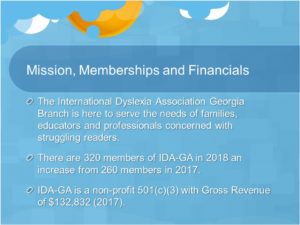
How IDA-GA Invests Your Membership and Donation Dollars
The following are ways that IDA-GA invests back into the community membership fees, donations, and funds raised via events such as Dyslexia Dash:
- Provide free Educational Outreach Meetings for both teachers and parents
- Provide Scholarships and Grants to expand capabilities for structured literacy training
- Provide Resources, Information, and Support to parents and teachers
 |
 |
 |
New 2022 Baseball Hats for Sale! Until Everyone Can Read!
Wear your support! “Until Everyone Can Read” on front of cap, IDA logo on left side. $24.95 including shipping.
To order, CLICK HERE.
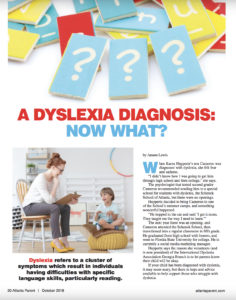
Raising Awareness of Dyslexia
IDA-GA joined forces with Atlanta Parents magazine to raise awareness about Dyslexia. The Article gives information to parents to help detect Dyslexia in their child and steps to be taken to become a successful advocate for your Dyslexic child.
Read the full article that appeared in the October issue of Atlanta Parents magazine by clicking here.
Leading Organizations in the Field Challenge Myths about Learning Disabilities Including Dyslexia
Myths about learning disabilities rob many of their potential to succeed and contribute in school and in the workplace, according to a white paper released during Learning Disabilities and Dyslexia Awareness Month in October by the International Dyslexia Association (IDA) and the Learning Disabilities Association of America (LDA).
“IDA does not recommend or endorse any individual, business, school, or program.”
Share this page with your friends…